Common trading mistakes
No trader gets it right every time. We all make occasional mistakes, and that's nothing to be ashamed of - in fact, it's often a good way to learn.
However, you can reduce your risk of blunders by being aware of the pitfalls that frequently catch out other traders. In this section we'll run through some of these common errors, so you can learn from the mistakes of others and steer clear of them yourself.
Insufficient preparation

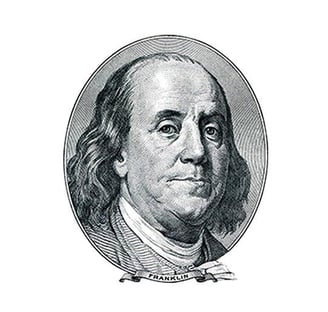
As Benjamin Franklin said, 'By failing to prepare, you are preparing to fail'. And in the world of trading such failure can cause significant financial pain, so it really does pay to do your homework before you venture into the markets.
Use the host of resources available - books, courses, trading conferences, the internet - to keep yourself informed about the latest trading ideas and techniques
Take your time to understand the markets that interest you, how they work and how they've been behaving
Create a trading plan to suit your trading goals, your skills and knowledge and your feelings about risk
Practise trading using a demo account, where you can get comfortable with using your trading platform and try out strategies in a safe environment
You may know of some experienced, successful traders who make it look easy. But unfortunately trading is not just a case of opening a position and waiting for the profits to roll in - a degree of skill and knowledge is essential.
Too many new traders rush in with misguided confidence and are punished for it by the markets. Don't be one of them.
Not following a plan
Suppose you needed to travel from Edinburgh to New York: would you just step out of the door and set off without researching your route or checking ticket availability? Without doing a little advance planning, you would be unlikely to arrive at your destination.
In the same way, heading into a trade without having a plan can get you into trouble.
In the 'Planning and risk management' course, we talked in detail about how to create a trading plan. Once you've done that, it's important to stick to the course you've plotted for yourself.
You may be tempted, every day, to ignore your trading plan and just stay in a little longer on this trade or go in heavy on that one. But if you've really taken the time to develop your trading plan then you should have faith in it being the best-suited approach for you.
Even the best trading plan remains only a guide, but the better the guide, and the better you can follow it, the better your chances of success in the long run.
Overreliance on software
Most people use some form of technology to assist their trading.
For example, you might study chart patterns or use automated alerts and algorithms as prompts to trade.
But, as useful as all of these tools are, it is important to remember that they are only tools, and must be employed wisely.
Just as your satnav can occasionally direct you to drive into a deep torrent of water because it doesn't know the river has flooded, trading technology isn't something to follow blindly. You still need to keep your eyes open and react intelligently to the signs you see.
So when using technology, such as charting software or other analysis tools, it's important that you understand the underlying concepts and the reasons behind what the charts are telling you. This will allow you to see the bigger picture and avoid unnecessary mistakes.
Lack of record keeping
Do you remember your first trade? What about the third, or the fifth?
If you're new to trading, the details may still be clear in your memory. But in a few months' time will you still be able to describe each step and decision in detail?
Unless you keep a trading log or diary, the chances are that this information will be lost. And if you can't remember what you did right, how can you replicate it? Similarly, if you don't know where you went wrong you could easily make the same mistakes again.
Your trading diary will let you look back at your experiences with the value of hindsight and learn from them. So what should you record in it?
Bad Timing
Timing is not only the art of good comedy - it's also central to good trading.
In the same way that a stand-up artist needs to deliver the punchline at exactly the right moment, you need to time your entry and exit from a market perfectly to maximise any profit or minimise any loss.
Timing mistakes are common among new traders. So how can you avoid them? Although getting your timing right isn't an exact science, there are a few tools that will help you to act at the right moment:
Chart analysis will help you forecast potential scenarios by revealing market patterns
A trading plan will help you to define your strategy, meaning you're more likely to avoid impulsive actions
Stops and limits will allow you to go about your business without having to monitor the markets constantly
Overexposure or underexposure
With an almost infinite range of financial markets and trading products to choose from, one problem a trader is unlikely to have is boredom.
However, sometimes it can be tricky to strike the right balance between, at one extreme, trying your hand at everything and, at the other, sticking only to what you know well. While it's risky to go too far outside your comfort zone or spread your capital too thinly, you shouldn't restrict your options excessively either. Just keep in mind, the wider the range of asset types you trade across, the more time and energy you'll need to monitor the factors affecting each one.
Misunderstanding Trends
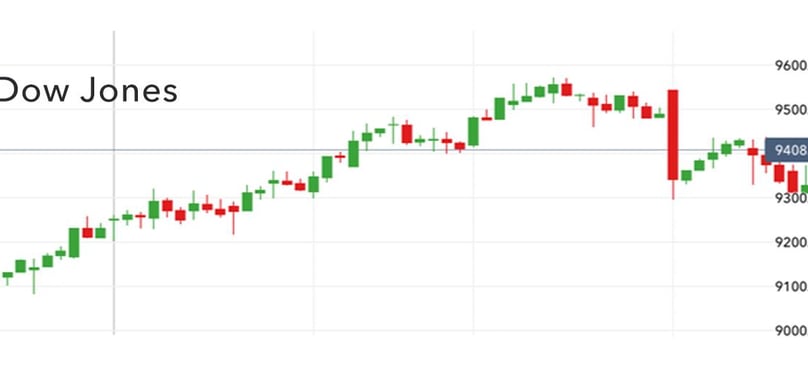
Imagine the Dow Jones has been steadily moving upwards over the long term, when a worse-than-expected non-farm payrolls report causes it to tumble. Does that mean it's now in a downtrend?
Inexperienced traders might assume the answer is 'yes', but in fact that's unlikely to be the case.
A trend is the long-term direction a market is taking.
Generally this is determined by macro-economic influences rather than individual political or economic events. So, in our example, you might see the Dow resume its uptrend after the initial volatility subsides.
There's an abundance of software available to analyse market trends, and these tools can be valuable if used correctly. You should just be careful to distinguish between short-term and long-term influences, as these may not be aligned.